
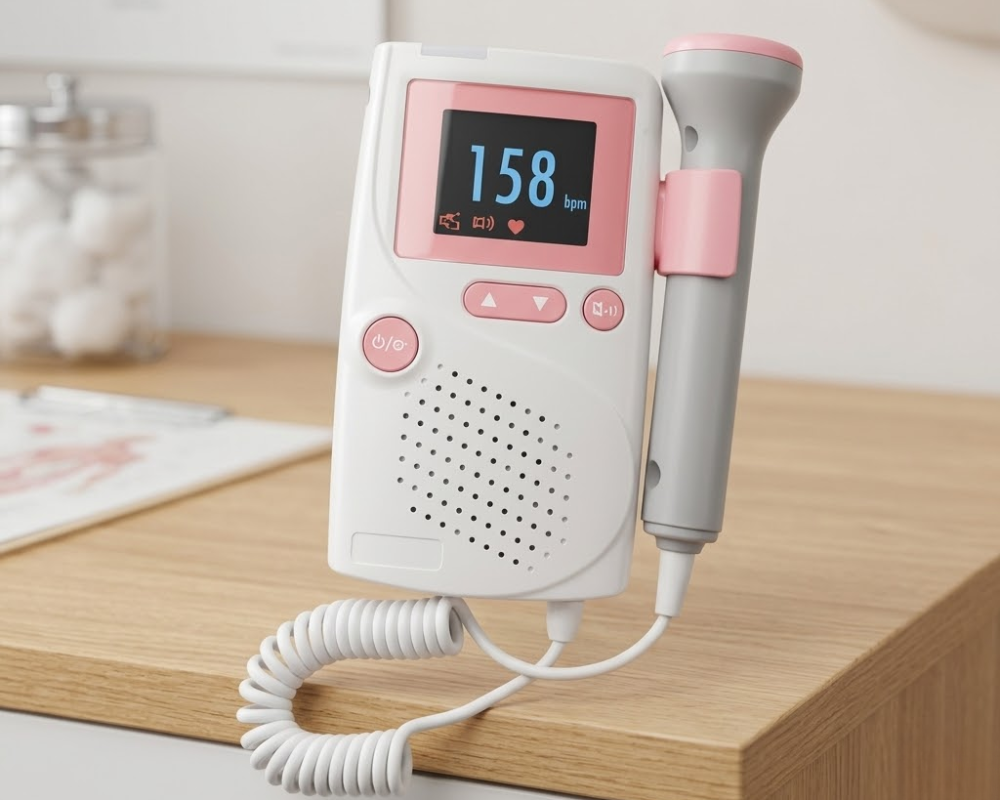
Fetal Doppler – Advanced Prenatal Fetal Heart Rate Monitoring Device
The Fetal Doppler is a compact, highly efficient, and non-invasive medical device designed to monitor and detect the fetal heart rate during pregnancy. It is widely used in hospitals, gynecology clinics, maternity centers, and even home care settings to ensure the health and well-being of the unborn baby. By using advanced ultrasound technology, the fetal doppler provides real-time audio and digital feedback of the baby’s heartbeat, helping healthcare professionals and expecting parents track fetal development with confidence.
This advanced prenatal monitoring device plays a crucial role in antenatal care, especially during the early and middle stages of pregnancy. It allows doctors and caregivers to listen to the fetal heartbeat, assess its rhythm, and identify any abnormalities at an early stage. Early detection of irregularities in fetal heart rate is essential for timely medical intervention and ensuring a safe pregnancy journey.
The working principle of the Fetal Doppler is based on Doppler ultrasound technology. It emits high-frequency sound waves that travel through the mother’s abdomen and reflect off the moving fetal heart. These reflected waves are then captured and converted into audible sound or digital readings, allowing users to hear and monitor the fetal heartbeat clearly. The technology is completely safe for both the mother and the baby, as it uses low-intensity ultrasound signals that do not cause any harm.
One of the key features of the Fetal Doppler is its high sensitivity and accuracy. The device is designed to detect even faint fetal heart signals, ensuring reliable monitoring even in early pregnancy stages. This high level of precision helps healthcare professionals confirm fetal viability and track heart rate patterns effectively. It is especially useful during routine prenatal checkups and high-risk pregnancy monitoring.
The Fetal Doppler is known for its compact and portable design, making it extremely convenient for both clinical and home use. Its lightweight structure allows easy handling, and it can be carried anywhere without difficulty. Many modern fetal dopplers come with ergonomic designs that ensure comfortable grip and easy operation, even for non-medical users under proper guidance.
Another important feature of the device is its clear audio output system. The fetal heartbeat is amplified and transmitted through a built-in speaker or headphone jack, allowing clear and audible sound of the baby’s heart. Some advanced models also come with digital displays that show fetal heart rate (FHR) values in real time, providing both visual and audio monitoring for better accuracy.
The device is also equipped with adjustable volume control and sensitivity settings, enabling users to customize the monitoring experience according to their needs. This ensures optimal sound clarity and reduces background noise interference, making the heartbeat monitoring process more accurate and comfortable.
Fetal Dopplers are widely used in prenatal care, routine pregnancy checkups, and high-risk pregnancy monitoring. They help doctors track fetal development, confirm pregnancy health, and monitor heart rate fluctuations. In high-risk cases such as hypertension, diabetes, or multiple pregnancies, continuous fetal monitoring becomes essential, and the fetal doppler plays a vital role in ensuring timely medical response.
One of the major advantages of the Fetal Doppler is its non-invasive and painless operation. Unlike other diagnostic procedures, it does not require any internal examination or discomfort to the patient. The device simply uses an external probe placed on the abdomen, making the process safe, quick, and stress-free for both mother and baby.
Modern fetal dopplers are designed with advanced signal processing technology, which filters out unwanted noise and enhances the clarity of fetal heart sounds. This ensures that healthcare providers receive accurate and stable readings even in challenging conditions such as maternal movement or early-stage pregnancies.
Many Fetal Doppler devices also come with digital recording and data storage features, allowing users to save heartbeat recordings for future reference. This is particularly useful for monitoring fetal development over time and sharing data with healthcare professionals during follow-up visits.
The device is also widely appreciated for its ease of use. With simple controls and intuitive design, even first-time users can operate it with minimal guidance. This makes it an excellent tool for expectant parents who wish to stay connected with their baby’s development between clinical visits.
In terms of safety, the Fetal Doppler is designed to meet international medical standards. It uses low-power ultrasound waves that are safe for repeated use during pregnancy. The device undergoes strict quality testing to ensure reliability, durability, and consistent performance in various clinical environments.
Fetal Dopplers are also valuable in medical education and training, where they help students and trainees understand fetal heart monitoring techniques. By listening to real-time fetal heart sounds, learners can gain practical knowledge of prenatal diagnostics and improve their clinical skills.
Healthcare professionals prefer Fetal Dopplers because of their accuracy, portability, and quick results. The device provides immediate feedback, allowing doctors to make fast clinical decisions when necessary. It enhances prenatal care by offering a simple yet effective method of monitoring fetal health.
In conclusion, the Fetal Doppler is an essential prenatal diagnostic device that combines advanced ultrasound technology with user-friendly design to deliver accurate and reliable fetal heart rate monitoring. Its non-invasive nature, portability, and high sensitivity make it a valuable tool in modern obstetric care. By enabling early detection of fetal health conditions and providing real-time heartbeat monitoring, the fetal doppler plays a crucial role in ensuring safe pregnancy outcomes and supporting overall maternal healthcare.

Reviews
There are no reviews yet.