Wireless CTG Machine – Advanced Cardiotocograph & Fetal Monitoring System
The Wireless CTG Machine – Advanced Cardiotocograph & Fetal Monitoring System is a modern, next-generation obstetric diagnostic device designed to monitor fetal heart rate and uterine contractions with maximum comfort, mobility, and accuracy. It is widely used in hospitals, maternity clinics, labor rooms, and prenatal care centers for continuous and real-time assessment of fetal well-being during pregnancy and childbirth.
This advanced wireless system represents a significant improvement over traditional CTG machines by eliminating cables and offering greater freedom of movement for both patients and healthcare professionals. It enhances patient comfort, improves workflow efficiency, and allows continuous monitoring even when the mother is mobile or in different positions during labor.
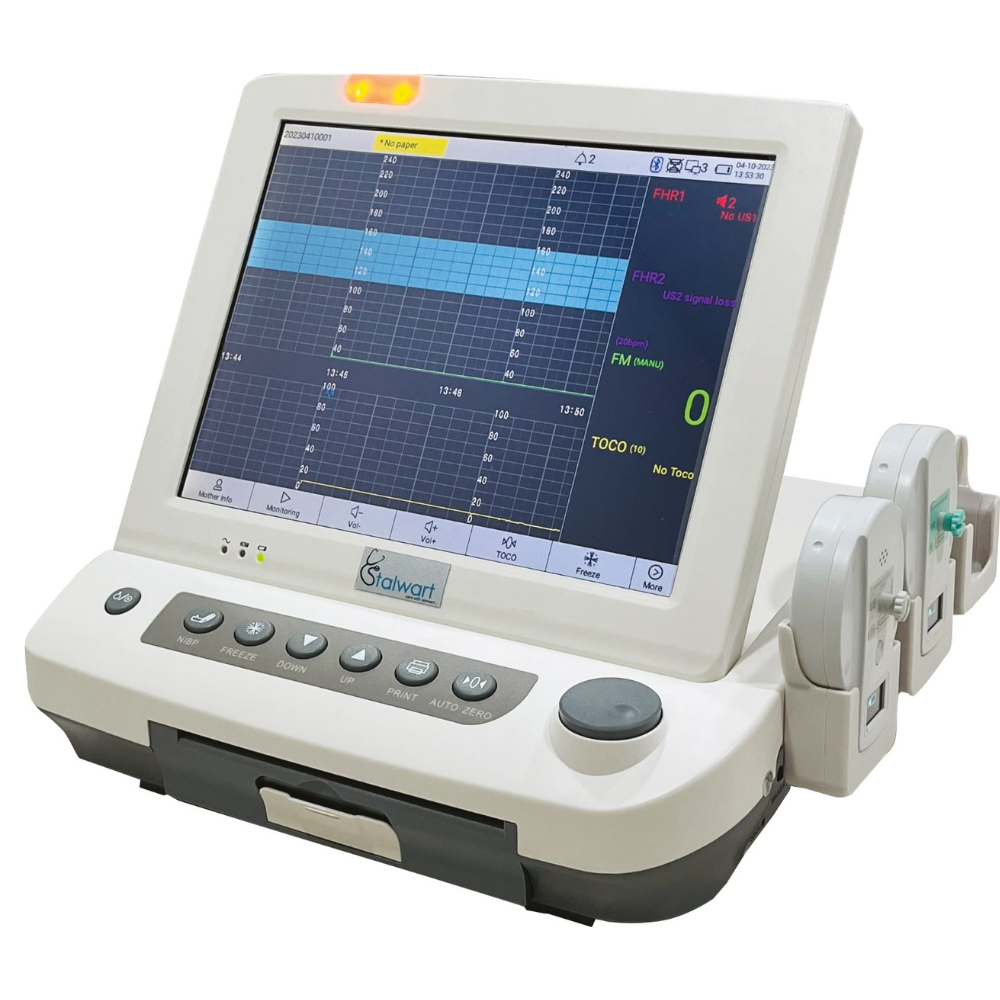
The Wireless CTG machine works on the principle of cardiotocography, where two key parameters are recorded simultaneously: fetal heart rate (FHR) and uterine contractions. The fetal heart rate is monitored using a high-precision ultrasound transducer, while uterine contractions are measured using a pressure-sensitive tocodynamometer. These signals are transmitted wirelessly to the central monitoring unit, where they are displayed in real time as clear graphical waveforms.
One of the most important advantages of the wireless CTG machine is its advanced wireless transmission technology. Unlike traditional wired systems, this device uses secure and stable wireless communication to transmit data from the patient to the monitor. This eliminates cable clutter, reduces patient discomfort, and allows greater flexibility during labor and prenatal monitoring. The wireless system ensures uninterrupted signal transmission with high accuracy and reliability.
The device provides real-time fetal monitoring, displaying continuous waveforms of fetal heart rate and uterine activity. These readings help healthcare professionals assess fetal health, detect abnormalities, and monitor labor progression. The high-resolution display ensures clear visualization of critical parameters, enabling quick and accurate interpretation of fetal conditions.
The Wireless CTG Machine is equipped with high-sensitivity sensors that ensure precise detection of fetal heart signals even in challenging conditions such as maternal movement or obesity. The system filters out noise and interference to provide stable and accurate readings. This level of precision is essential for identifying early signs of fetal distress and ensuring timely medical intervention.
Another key feature of this advanced system is its mobility and portability. Since the system is wireless, it allows pregnant women to move freely during monitoring. This is especially beneficial during labor, as movement can help reduce discomfort and assist in natural delivery. The compact and portable design also makes it easy to use in different hospital departments or emergency situations.
The Wireless CTG machine comes with a user-friendly interface and high-definition display screen that shows real-time fetal data in an easy-to-understand graphical format. The intuitive control panel allows healthcare professionals to adjust settings such as sensitivity, monitoring mode, and alarm thresholds with ease. This ensures smooth operation even in high-pressure clinical environments like labor rooms and emergency obstetric units.
The system also includes data storage and recording capabilities, allowing medical professionals to save patient monitoring records for future reference. These records can be reviewed for follow-up analysis, medical documentation, or comparison in high-risk pregnancies. The ability to store and retrieve data helps in maintaining accurate patient history and improving long-term prenatal care.
An important safety feature of the Wireless CTG machine is its automatic alarm system. The device continuously monitors fetal heart rate patterns and uterine activity. If any abnormality or sign of fetal distress is detected, the system immediately triggers visual and audio alerts. This ensures rapid response from healthcare professionals and reduces the risk of complications during pregnancy or delivery.
The device supports multi-mode monitoring, including antepartum and intrapartum monitoring. Antepartum monitoring is used during pregnancy to assess fetal well-being, while intrapartum monitoring is used during labor to ensure safe delivery. This versatility makes the Wireless CTG machine suitable for a wide range of obstetric applications.
Integration with digital healthcare systems is another major advantage of this device. The Wireless CTG machine can be connected to hospital information systems (HIS) and electronic medical records (EMR), enabling seamless data transfer and centralized patient monitoring. This improves communication between healthcare departments and enhances overall clinical workflow efficiency.
The system is designed with advanced signal processing technology that ensures accurate and stable fetal monitoring. It eliminates external noise and interference, providing reliable readings even in busy hospital environments. The robust wireless communication system ensures uninterrupted data transmission throughout the monitoring period.
Patient safety and comfort are top priorities in the design of the Wireless CTG machine. The non-invasive monitoring process ensures that both mother and baby remain safe during examination. The wireless sensors are lightweight and comfortable, reducing physical discomfort during prolonged monitoring sessions. The absence of wires also minimizes movement restrictions, improving the overall patient experience.
The Wireless CTG Machine is widely used in prenatal care, high-risk pregnancy monitoring, labor management, and obstetric emergency situations. It is essential for detecting conditions such as fetal hypoxia, abnormal heart rate patterns, uterine dysfunction, and other complications. Early detection of these issues helps healthcare professionals take timely action, ensuring better outcomes for both mother and child.
Healthcare professionals prefer this advanced system due to its accuracy, flexibility, and ease of use. It enhances clinical decision-making by providing real-time insights into fetal health and labor progression. The wireless functionality improves workflow efficiency and reduces the limitations associated with traditional wired CTG systems.
Durability and reliability are also key strengths of this device. Built with high-quality materials and advanced engineering, the Wireless CTG machine is designed for continuous use in demanding clinical environments. Its low maintenance requirements and long operational life make it a cost-effective solution for hospitals and maternity care centers.
In conclusion, the Wireless CTG Machine – Advanced Cardiotocograph & Fetal Monitoring System is a revolutionary advancement in obstetric care technology. With its wireless connectivity, real-time monitoring, high-precision sensors, and user-friendly design, it significantly improves fetal assessment and maternal care. It enhances patient comfort, supports early detection of complications, and ensures safer childbirth experiences. This advanced system represents the future of fetal monitoring and is an essential tool for modern healthcare providers dedicated to delivering high-quality maternity care.